Showing posts with label Makoto Fujimura. Show all posts

Wednesday, July 6, 2016

In fighting False Idols and What To Do About Them

“If, then, any one reviles us, irritates, stirs us up to violence, tries to make us quarrel; let us keep silence, let us not be ashamed to become dumb. For he who irritates us and does us an injury is committing sin, and wishes us to become like himself.” Ambrose, On the Duties of the Clergy

In the mass shooting at The Pulse nightclub we are witness to an amazing work of cultural deconstruction.  The victims were in large measure gay men, many where young 20 somethings enjoying a night out with friends and partners. The shooter, a young man himself, proclaimed on the 911 call his allegiance to Islam and to ISIS.  His acts were motivated out of a radical religious hatred of these men and the lifestyle they engaged in. 
Regardless of our convictions toward the behavior of these individuals, both victims and shooter, we need to acknowledge the horrific loss. The individuals were each uniquely made in the image of God. Something has been taken from this Earth that can never be replaced. There life was unjustly taken from them before they really had a chance to live it. Even the shooter who is guilty of 50 cold-blooded murder is also victim of a much larger cultural force that has intellectually enslaved a vast  portion of the world’s population. 

One not familiar with the current culture war might be perplexed how the media has chosen to report the story. The larger culture has laid at the church’ doorstep the responsibility for the awful tragedy that was this mass shooting. The media has championed as war heroes men who where brought together because of very private, personal and intimate behavior.  The government and media has silenced, as best as they can, the religious core which sparked this violence.

       What are we to make of this reaction? Our first response, I suggest was what Russel Moore of the Southern Baptist Convention suggested 48 hours after the shooting. We aught to weep with those who weep. And acknowledge the fearful loss to those who were closest to the victims.  

There is a titanic internal struggle happening in the larger culture. Which golden idol must we/do we value more?   On one hand, The Pulse night club represents the most direct threat to the Judeo-Christian foundations of our culture. The gay community represents for many the fullest expression of the sexual revolution. With the shooting, that expression is threatened, and so too our larger culture’s desire for sexual liberty.  On the other hand, is Christianity’s and historically speaking Western Civilization’s “greatest” foe.  Islam has been masterfully portrayed as the ultimate victim of European and American culture. A historic set of slights that date back to 1099 and the first crusade.   We are constantly prodded to treat with kids gloves an entire religion. What we have seen in the media is a scramble to weigh which group takes center stage in our culture’s theater of grievances. 

Even if you disagree with my analysis, one is still left wondering what to do long term? Once the immediate grief, anger and shock has worn off, how must the church respond?  Bishop Ambrose in his book On the Duties of the Clergy suggests one strategy. Remain silent. Remain silent as to avoid falling into sin by saying to much. Remain silent as Christ remained silent at his trial.  What is happening in our culture is a clash of cultural false idols. As their struggle for supremacy continues, they will undercut each other, chopping both of them off at the knees. Neither Islam of the Gay agenda can stand the brutal beating of reality in God’s created universe. Both will fall and be destroyed. 

If action is required let it be inspired by the action of the cross.  It is not without irony and paradox that the most beautiful image in Christianity is also one of the ugliest, the crucification of Christ.  Makato Fujimura, artist, Christian, and director of the Brehm Center states that beauty appeals, delights, invites and refreshes the individual who beholds it. Works of beauty “are worth of scrutiny, rewarding to contemplate, deserving of pursuit.”  In a world filled with broken idols, the soon to broken idols, the cross, and the acts of beauty inspired by it, will be the only things left standing in the rumble.

Note: this Post originally published in the Tractarian a publication of The Anglican Cathedral Church of Ephiphany. 


Tuesday, March 22, 2016

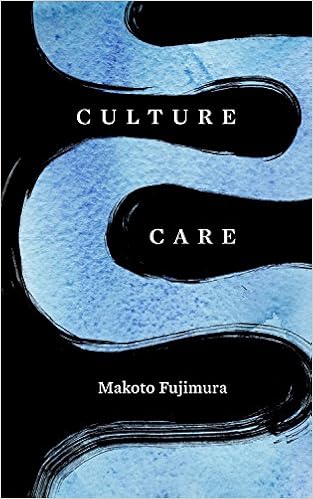
Makoto Fujimura Culture Care

As something of an arts pastor, but still not sure if that is the best label for the vocational calling on my life.  I have a passion for artist of all stripes to grow both in their creative ability as well as their walk with Christ. As a result, I am always on the hunt for good books and good examples of artist to share with other artists.   One of the individuals I have found in this quest is Makoto Fujimura. I have mentioned him before in this very blog. Mako was an elder at Redeemer Presbyterian in New York City, but he is currently head of the Brehm Center at Fuller Theological Seminary.  If you do not recognize Redeemer Presbyterian, it is the home church of Tim Keller.   Mako is blessed with a mediative mind that thinks deeply about faith and beauty.     The Brehm Center is a think tank of sorts for Christianity and Culture. Mako’s latest book is called Culture Care.   The book is good enough to simply share excerpts from and leave it at that. Because quite frankly, he says all that I would want to say in a far better way.


“Sociologist James Davison Hunter noted more than twenty years ago that participants in culture wars employ language that reduces the enemy to a caricature, portraying their ideas as not only false but pernicious, and alienating their humanity. Hunter identifies the culprit in Culture Wars (1991), arguing that a shared weakness “in both orthodox and progressive alliances” is “an implicit yet imperious disregard for the goal of a common life.  This disregard for the “goal of a common life” is the abject faith of our times;  but from this failure we can begin a new path toward Culture Care.  Culture is not a territory to be won or lost but a resource we are called to steward with care. Culture is a garden to be cultivated.” Page 22

                                                                                                ###

“There are thus significant overlaps for Culture Care not only with Creation care but with Soul Care, which is the spiritual development and psychological integration that can result when we diligently follow good guidance. The work of Soul Care, the work of both therapist and client, is extemporaneous. It cannot be linear but is rather interactive and creative process that responds on an ongoing basis to the shifting needs of the soul.  All effective care providers are in this sense artists of the soul.” Page 27 


“Culture care starts with the identification and articulation of brokenness. It creates safe space for troth-telling. But it does not stop there. It starts with listening and then invites people onward toward beauty, wholeness and healing.  As we become able to acknowledge the truth of our situation and can tell that story, we are encouraged to move into caring for artists and all other participants  in the culture, into creating contexts for deeper conversation, into fostering spiritual growth, and sometimes into problem solving.”   Page 28

Monday, November 23, 2015

Reflecting Light

Recently I attended a lecture given by Makoto Fujimura which was sponsored by the Trinity Forum and held at the Columbia Museum of Art (Columbia, SC). Makoto is a world famous artist, lecturer, arts advocate and champion for culture care. His lecture was in part to promote his new book entitled Culture Care which articulates a vision beyond the cultural wars to something grander.  For Fujimura, culture is an ecosystem to be tended to as if a delicate and lavish garden. 
As intriguing as this idea is for the church, it was the smallest of details in his talk that arrested my attention.  The process in which Fujimura paints involves the crushing of minerals and semi-precious stones mixing it with other clear liquid ingredients to form a paint.  Fujimura described the process of taking these minerals in a mortar and pestle and pulverizing them by hand.  I have in past, at other venues, heard him describe this very same process, and always wondered, why by hand?

Fortunately at this particular talk he explained, “If you grind the stones by a machine they become perfectly spherical and they do not reflect any light. Only by hand do they each become microscopic prisms which then are able catch the light.” It was in fact a stunning off handed remark, its implications for the spiritual journey are profound.  The very nature of ‘by hand’ means personal, individual connection with that which is being pulverized. 
Makoto’s explanation should galvanize the spiritually attuned Christian to a wonderful, though be it disconcerting relating. God could have easily made a machine like process in which sanctification takes place. He could have made this process uniform across the breath of the church. But instead chose a process that leaves room for the light of God’s love to be discovered in the asymmetrical and broken edges of our lives.   Just as with Paul and the thorn in his flesh or Jacob and his hip dislocation, God is found in the broken places of our lives.  To often we strive for perfection, believing perfection is necessary for witness and testimony.  In truth it is in fact the very opposite. It is how God reflects and shines through the brokenness bits of our lives applied to the canvas with Grace and faith, just as it is with Fujimura’s painting that catch the light and radiate beauty.