Showing posts with label Devotional. Show all posts

Tuesday, April 5, 2016

Authentic Beauty

As a husband I am pretty confident that every man in America who has a girlfriend or a wife is on the hook every Valentine's day for a gift.  It is on the men in America to provide our better halves with a token on our love and affection.  Consider if you will how your other half might react to you if you chose to go to Hobby Lobby and while there purchase a bouquet of plastic roses.  Or if you take your significant other to the local Sonic Drive-in for Valentine’s dinner. Does anyone doubt that it would be taken as a less than an authentic expression of  a man’s devotion?  
    For our wives or girlfriends only the real, authentic rose would do. It is in the real stuff, the rose that feels, smells, and looks like a rose that will communicate to her our genuine authentic feelings toward her.  No matter how well meaning the bouquet of fake flowers is, no matter how sincere your feelings toward your spouse or girlfriend is, providing something fraudulent is going to insult her. 
  The same goes for the world of art and beauty---authenticity is a necessary component to faithful expression of beauty and feeling.  There is no more obvious place where this is on display then when it comes to Christian film making.  I feel very strongly that one of the reasons Christian films so often fail as a matter of story telling is that they are inauthentic, with inauthentic characters.  Madeline L’Engle the author of  A Wrinkle in Time stated “Non-fiction may write what it true but fiction is about truth.” Christian films put sentiment, and strict adherence to what maybe called a “good conduct code” ahead of presenting something first and foremost that is real and genuine. 
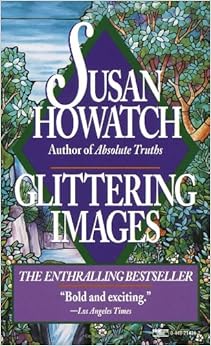
Allow me to give you two examples of what I mean by genuiness. One of my favorite novels is called Glittering Images by Susan Howatch, by the way it is another book I would recommend you place on your to-read list.  It is the story of a scholar-priest, Charles Asworth, set in the 1930’s, Dr. Charles is sent to spy on the bishop of the fictional city of StarBridge by the ArchBishop of Canterbury.  Dr. Asworth soon discovers a scandal, a sexual Ménage à trois between the bishop, his personal assistant, and the bishop’s wife.  But his discovery brings about in this scholar-priest his own psychological break as he confronts the sexual secrets of his own family.  The political shenanigans and jealousy of the Archbishop, the sexual failings of the bishop of Starbridge and the mental breakdown of the main character would all be non starting points in any novel on the shelves of Life Way Christian bookstore. However, Glittering Images is a powerful cautionary tale that secrets in our lives have a way of getting out no matter how desperate we are to hide them. 
The second example is probably more familiar to us, Steven Spielberg’s  Schindler’s List.  This movie justifiably received the Oscars it did, including best picture, because it took an authentic and unflinching look at the moral ambiguity and dehumanizing actions of the holocaust.  Can you imagine how that film would have been if it had stuck to the no nudity, no violence, no moral complexities that most of our Christian films take? The brokenness of the characters, both good and bad reveal something truthful about the gospel no Christian film would dare tackle. 

In both examples it is the darkness, depravity, and honesty that help communicate something truthful.  Genuine characters, situations and reactions to events are analogous to real roses on Valentines day. The more real these elements of your art the the more that they help communicate your respect and even love for the audience of your art as an artist who claims the name of Christ.

Wednesday, July 29, 2015

The Greatest Biblical Loser: And What Evangelicals Need to Learn From Him

For nearly 18 months now I have been reading and studying the book of Jeremiah. My Logos Bible Software has two commentaries open and available to me, the Hebrew text and exegetical guides are out, links to Strong’s and the BDB are also open. I have a running file 34 pages of notes that I have gathered in this past year and half.  With all of these tools I typically get through 3-4 verses at a time. For those who really know me this is not a surprise. For if I’m not 4-5 layers deep into a text then I might as well be skipping through the Biblical forest on my way to Joel Osteen’s house. I am not really reading or studying the text unless I am up to my arm pits it Biblical exegetical tools and questions. But one thing is as clear as day about the life of Jeremiah—Jeremiah was a loser. 
By all Earthly accounts (No super spiritualizing his life with quips of ‘he won the eternal race.’ It is a cheep cheat.) he failed in all the ways we determine success and failure in American Christianity and we can even say how we measure success in the biblical world.  His call was to preach to a stiff neck rebellious people a message of repentance. They did not repent. He never climbed the temple establishment’s political power structure. His network of movers and shakers were small and grew smaller with time.  When he was commissioned to tell the nation to accept the punishment God was bringing, they ignored him.  In fact in Chapter 21 when defeat and ruin where immanent, they hoped coming to Jeremiah would earn them brownie points and a message of good news.  It did not, and the results was one of the hardest and most bone chilling messages of the entire book.  When in the end of the book he prophesied to the nations, there is no indication they even got the message let alone did anything about it. The Israelites chose to sing the proverbial “kumbaya” and hope that their status as God’s chosen would be enough to get them out of this latest jam. Jeremiah was beaten, jailed, ignored, mocked and finally exiled against his will to Egypt. He was not even allowed the courtesy of heading off with the rest of the exiles into Babylon or staying in the land he had called home for his entire life. Compared to Jonah who begrudged his calling, even betrayed his calling, Jonah could in the end say that he was the instrument of God’s successful rescue mission of Nineveh. Jeremiah could not even say that on his resume.
Adding to my sense of Jeremiah as the Bible’s greatest example of  failure is Eugene Peterson’s Running With Horses. In just two hundred pages Peterson describes Jeremiah’s futile attempts to get Israel to listen to God’s voice and be the people God had called them all to be. Peterson’s book is in many ways a recounting of the depressing story of a man whose inner constitution was made of iron and bronze (as God himself describes Jeremiah) as much as his heart and body was made of flesh and blood. 
It is at this point in the story where I believe Evangelicals need to embrace Jeremiah on Jeremiah’s terms. We too often look for spiritual heroes, people who overcome their personal demons, the established hierarchy, and the wickedness of their culture. We expect, even demand that God give us victories, that our spiritual leaders move from one success to a greater success. We are failing to embrace the fact, the reality that often times Yahweh faithfulness also means failing to accomplish any of those things. And as in the case of Jeremiah, Yahweh faithfulness means failing at everything. 
Our culture is sick and dying.  America has killed over 55 million unborn human beings, we embrace sexual perversion as an expression of our individualism, and we are increasingly inclined to embrace radical Islam over and against culturally uncouth Christianity. Rather than sounding the trumpet to form ranks in a culture war (which may already be lost), might it be that God is calling us to develop a soul of iron and bronze? What would it mean to name our churches First Church of the Losers, as opposed to Victory Assembly?
I am not saying I like this prospect. Far from rejoicing with the loser label, I dread it, hate it even. I read Jeremiah hoping that this is not my own personal calling, nor that of the Church in North America.  No one wants to be a loser.  No one wants to bang his or her head against a corrupt and sinful culture only to be proclaimed a loser at the end of his or her life.  Jeremiah is a testimony to the reality that what God does too us is often as important, if not more important, than what he does through us. It is a difficult pill to swallow because it ultimately means we can’t guarantee hero status in the eyes of our peers or our enemies. It may just mean that the only thing we have to hold onto for our sense of worth is Christ himself and nothing more. 

Tuesday, February 17, 2015

Ehud's Gift

One of my favorite narratives in scripture is found in Judges chapter 3:12-30; the story is Ehud and the deliverance of Israel from the king of Moab. Since I posted two weeks ago concerning calling I thought I would take my own advice and meditate on the idea of calling, using this passage as the basis of my meditation.    On one hand it is a serious recounting of how once again God works through a uniquely prepared individual to provide salvation for his chosen. On the other hand, it is a macabre comical scene, a Biblical example of bathroom humor. 
To lay out the narrative, the king of Moab, Eglon, has managed to oppose the people of Israel for 18 years. He extorts the people demanding that tribute be brought to him each year.  It is Ehud’s turn to take the tribute to the king.  He delivers the tribute without a hitch, but then returns to the king with a “secret message.”   The king clears the room and thus provides Ehud with the privacy he needs to carry out God’s judgement.  With his left hand Ehud stabs the king through, the entire sword disappearing within the fold’s the of kings fat.  Eglon’s attendants are paralyzed. They think their king is relieving himself and do not want to interrupt, thus allowing Ehud to escape. 
What really grabs my attention in this passage, as it regards calling, is the description of Ehud as left handed.  At least one commentator suggests that his left handedness was in fact more of a skill. A cleaver fighting ability that was learned.  This same commentator sights 1 Chronicles 12:2 of men who could fight with either hand.⁠1  For a moment let us take the scripture literally or at least at face value.  Let us assume Ehud was born with the left hand dominate over his right hand.   That he indeed was left-handed in the modern American sense. 
As a left hander myself, I am aware how everything feels as if it is made for right handed individuals.  Left handedness has overtones of sinisterness and curse: for example, a left-handed compliment.   Or take the fact that our world is designed for those who are right handed. Ever notice vending machines require you to put money in with your right hand, assuming that you are in fact right-handed.  Or the left hand associated with dirtiness. Which side of the toilet is the plunger? The left side of course. It is hard to imagine the stigma of left handedness has changed since even Ehud’s time. Ehud most likely faced some level of  stigma and felt that sense of awkwardness and outsiderness which comes with being odd or different. 
 It is this quirk of fate that puts Ehud in the right place, at the right time ,with the right gifts, no pun intended. All his life his left handedness has been at best a curious mystery.  At this moment of deliverance it becomes the essential key to the plot of God’s redemptive story.  Calling is both time (Ehud’s entire life to this moment), and created makeup (who Ehud was physically). As it so often does the tension lays in waiting around to see how the puzzle pieces of circumstance and created order fuse together at the critical moment of our lives.  Admittedly, calling is often not what we expect and even if, as in the case of Ehud it all comes together, there is no guarantee that we will feel that all the questions have been wrapped up in a neat little bow.  
Take for example one of the most difficult passage of scripture to come to terms with.  In John chapter 9 the disciples ask Christ a question concerning a man born blind.  They asked, “who sinned?” In other words who is at fault, who is to blame for the sorrow this man encounters on a daily basis.  Jesus’s answer is staggering, it raises incredible questions.  “Neither. . . . This happened so that God may be displayed in him.”  It is difficult for me not to take this answer personally. It appears as if an entire life of disability was for the purpose of an object lesson.  Does God take lightly the suffering of others? Is the man’s suffering dwarfed in comparison to God’s glory?  
To one extent the answer is a resounding, “Yes, God’s glory far outstrips the suffering of any one individual.”  Calling is not something we make up, creating it out of our own sense of ourselves and desires.  Instead, calling is that which God grants as a gift, a strange, mysterious grace that is ultimately more concerned with God’s greatness then our own.  And yet, as with Ehud we are perfectly made for the calling God gifts to us. We are perfectly fit for the narrative in which we are placed. 

anImage_4.tiff

1 “They were armed with bows and were able to shoot arrows or to sling stones right-handed or left-handed. . . . ”